 EN
EN

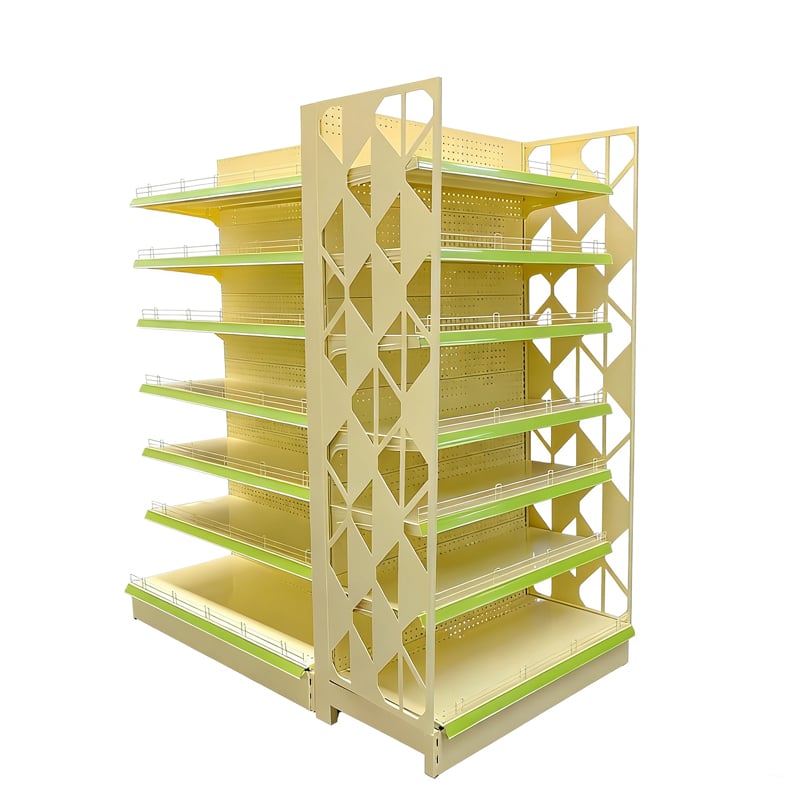
Industrial perforated back panel shelf systems have become essential components in modern retail environments, offering manufacturers the ability to create versatile display solutions that adapt to diverse merchandising needs. These specialized shelving systems combine robust industrial-grade construction with strategically placed perforations that enable flexible mounting configurations and enhanced product visibility. Factory production of perforated back panel shelf units requires precise engineering to ensure consistent perforation patterns, structural integrity, and compatibility with various retail fixtures and accessories.
The manufacturing process for retail-grade perforated back panel shelf systems involves sophisticated metalworking techniques that balance material efficiency with structural performance. Factory operations must coordinate multiple production stages including material preparation, precision perforation, surface treatment, and quality control to deliver shelving solutions that meet the demanding requirements of retail environments. Understanding the factory production process provides retailers and distributors valuable insight into the capabilities and limitations of different perforated back panel shelf configurations.
Manufacturing Process and Industrial Production Methods
Material Selection and Preparation
Factory production of perforated back panel shelf systems begins with careful material selection, typically utilizing cold-rolled steel or aluminum alloys that provide optimal strength-to-weight ratios for retail applications. Industrial manufacturers evaluate material specifications including gauge thickness, tensile strength, and corrosion resistance to ensure the perforated back panel shelf can withstand repeated loading cycles and environmental conditions. The material preparation stage involves cutting raw stock to precise dimensions, with tolerances maintained within industrial standards to ensure consistent perforation alignment across production runs.
Quality control during material preparation includes verification of chemical composition, surface condition, and dimensional accuracy before proceeding to the perforation stage. Factory protocols require batch tracking of material lots to maintain traceability throughout the perforated back panel shelf production process. Surface preparation may include degreasing, cleaning, and pre-treatment operations that optimize adhesion for subsequent coating applications. These preliminary steps directly impact the final performance characteristics of the perforated back panel shelf system.
Precision Perforation Technology
The perforation process represents the most critical manufacturing stage for perforated back panel shelf production, requiring specialized equipment capable of creating consistent hole patterns without compromising structural integrity. Industrial factories employ computer-controlled punching machines or laser cutting systems that can achieve precise hole spacing, diameter, and edge quality across large panel dimensions. The perforation pattern design must balance material removal with retained strength, ensuring the perforated back panel shelf maintains load-bearing capacity while providing adequate mounting flexibility.
Advanced manufacturing facilities utilize programmable tooling systems that can accommodate multiple perforation patterns within a single production run, enabling efficient manufacturing of different perforated back panel shelf configurations. Quality monitoring during the perforation process includes real-time verification of hole dimensions, spacing accuracy, and edge condition to prevent defects that could affect accessory compatibility. Post-perforation inspection protocols verify that each perforated back panel shelf meets dimensional specifications and surface quality standards before proceeding to finishing operations.
Design Specifications and Retail Versatility Features
Perforation Pattern Engineering
The engineering of perforation patterns for retail perforated back panel shelf systems requires careful consideration of standard hardware dimensions, weight distribution requirements, and visual aesthetics. Factory design teams analyze retail fixture standards to determine optimal hole spacing that accommodates the widest range of accessories including hooks, brackets, and specialized display components. The perforated back panel shelf pattern must provide sufficient mounting points while maintaining material strength and preserving the clean visual appearance required in retail environments.
Standard perforation patterns for industrial perforated back panel shelf production typically feature uniform hole spacing ranging from 25mm to 50mm centers, with hole diameters sized to accommodate common retail hardware specifications. Factory engineering considers both vertical and horizontal mounting requirements, ensuring the perforated back panel shelf can support accessories in multiple orientations. Advanced perforation designs may incorporate variable spacing zones that provide concentrated mounting options in high-stress areas while maintaining standard spacing elsewhere.
Load-Bearing Capacity and Structural Engineering
Industrial manufacturing of perforated back panel shelf systems requires careful structural analysis to ensure adequate load-bearing capacity despite material removal from perforation. Factory engineering teams utilize finite element analysis and physical testing to verify that the perforated back panel shelf can support distributed loads and concentrated point loads without excessive deflection or failure. The relationship between perforation density and structural performance guides material thickness selection and reinforcement strategies.
Quality assurance protocols in perforated back panel shelf factories include load testing procedures that verify performance under simulated retail conditions. Testing typically evaluates both static loading scenarios and dynamic loading conditions that may occur during merchandise handling and customer interaction. The structural design must account for stress concentrations around perforation edges and ensure the perforated back panel shelf maintains integrity under long-term loading conditions typical of retail applications.
Surface Treatment and Finishing Processes
Protective Coating Applications
Factory finishing operations for perforated back panel shelf systems focus on providing durable surface protection that maintains appearance and prevents corrosion in retail environments. Industrial coating processes typically include powder coating or electroplating applications that create uniform coverage across complex perforated surfaces. The perforated back panel shelf finishing process must ensure complete coverage of perforation edges and internal surfaces where moisture or contaminants might accumulate during service.
Advanced finishing facilities employ electrostatic coating systems that provide excellent coverage uniformity on perforated back panel shelf surfaces, with specialized techniques for reaching internal areas of perforations. Quality control during finishing includes coating thickness measurement, adhesion testing, and appearance evaluation to ensure consistent results across production batches. The finished perforated back panel shelf must meet retail industry standards for durability, cleanability, and aesthetic appearance throughout expected service life.
Color Matching and Aesthetic Customization
Industrial production of perforated back panel shelf systems often requires precise color matching to coordinate with retail store design themes and brand identity requirements. Factory color management systems utilize standardized color references and spectrophotometric verification to ensure consistent appearance across multiple production runs. The perforated back panel shelf finishing process must accommodate various color requirements while maintaining coating performance characteristics.
Customization capabilities in modern perforated back panel shelf factories may include special texture finishes, decorative patterns, or branded elements that enhance retail presentation. These specialized finishing options require additional quality control measures to verify that aesthetic modifications do not compromise the functional performance of the perforated back panel shelf system. Factory flexibility in accommodating custom finishing requirements often determines suitability for specific retail applications and market segments.
Quality Control and Factory Standards
Dimensional Accuracy and Tolerance Management
Factory production of perforated back panel shelf systems requires stringent dimensional control to ensure compatibility with standard retail fixtures and accessories. Quality control protocols include comprehensive measurement of panel dimensions, perforation spacing, hole diameters, and flatness characteristics using precision measurement equipment. The perforated back panel shelf must meet tight tolerances to ensure proper fit and function within retail shelving systems and maintain consistency across large production quantities.
Statistical process control methods in perforated back panel shelf manufacturing monitor production variables and identify trends that might affect dimensional accuracy. Factory quality systems typically include regular calibration of measurement equipment, operator training programs, and documented procedures for handling non-conforming products. Dimensional verification of the perforated back panel shelf occurs at multiple production stages to identify and correct deviations before final assembly and packaging.
Performance Testing and Validation
Comprehensive testing protocols in perforated back panel shelf factories verify that finished products meet performance requirements for retail applications. Testing procedures typically include mechanical property evaluation, load capacity verification, and durability assessment under simulated service conditions. The perforated back panel shelf undergoes standardized testing sequences that evaluate structural integrity, coating performance, and dimensional stability over time.
Advanced testing facilities may include environmental testing capabilities that expose perforated back panel shelf samples to temperature cycling, humidity exposure, and corrosive atmospheres to verify long-term performance characteristics. Quality documentation systems track testing results and maintain traceability records that demonstrate compliance with industry standards and customer specifications. These testing protocols ensure that each perforated back panel shelf batch meets the demanding requirements of retail environments.
Production Efficiency and Manufacturing Optimization
Automated Manufacturing Systems
Modern perforated back panel shelf factories employ advanced automation systems that optimize production efficiency while maintaining consistent quality standards. Automated material handling systems transport raw materials and work-in-process components through sequential manufacturing operations without manual intervention. The integration of robotics and programmable equipment enables factories to produce perforated back panel shelf units with minimal labor input while achieving precise repeatability across large production volumes.
Factory automation systems for perforated back panel shelf production typically include integrated quality monitoring capabilities that detect deviations in real-time and automatically adjust process parameters to maintain specifications. These systems can accommodate rapid changeovers between different perforated back panel shelf configurations, enabling efficient production of mixed product batches. Advanced factories utilize predictive maintenance systems that monitor equipment condition and schedule maintenance activities to minimize production interruptions.
Lean Manufacturing Implementation
Industrial perforated back panel shelf manufacturing benefits from lean production principles that eliminate waste and optimize material flow through factory operations. Lean implementation includes value stream mapping that identifies all activities required to transform raw materials into finished perforated back panel shelf products, highlighting opportunities for efficiency improvement. Factory layout optimization reduces material handling distances and minimizes work-in-process inventory while maintaining production flexibility.
Continuous improvement programs in perforated back panel shelf factories focus on reducing cycle times, improving first-pass quality, and minimizing material waste during production operations. Employee involvement in improvement initiatives ensures that practical knowledge from production operators contributes to process optimization efforts. The implementation of lean principles enables factories to respond quickly to changes in perforated back panel shelf demand while maintaining cost competitiveness.
FAQ
What materials are typically used in industrial perforated back panel shelf manufacturing?
Industrial perforated back panel shelf systems are primarily manufactured using cold-rolled steel or aluminum alloys selected for their optimal strength-to-weight ratios and formability characteristics. Cold-rolled steel provides excellent structural performance and cost-effectiveness for most retail applications, while aluminum offers superior corrosion resistance and lighter weight for specialized environments. Material selection depends on load requirements, environmental conditions, and aesthetic preferences specific to each retail application.
How do factories ensure consistent perforation quality across large production runs?
Factories maintain consistent perforation quality through computer-controlled punching or laser cutting systems that eliminate human variability in hole placement and sizing. Real-time quality monitoring systems verify hole dimensions, spacing accuracy, and edge condition during production, with automatic process adjustments when deviations are detected. Statistical process control methods track perforation parameters across production batches to identify trends and prevent quality degradation before it affects finished perforated back panel shelf products.
What customization options are available for perforated back panel shelf systems from industrial manufacturers?
Industrial manufacturers typically offer customization options including panel dimensions, perforation patterns, material specifications, and surface finishes to meet specific retail requirements. Color matching services enable coordination with store design themes, while specialized perforation patterns can accommodate unique accessory requirements. Advanced manufacturing facilities may provide custom shapes, integrated mounting features, or branded elements that enhance retail presentation while maintaining structural performance standards.
How do factories verify the load-bearing capacity of perforated back panel shelf systems?
Factories employ comprehensive testing protocols including finite element analysis, physical load testing, and fatigue evaluation to verify perforated back panel shelf load-bearing capacity. Testing procedures evaluate both distributed loading scenarios and concentrated point loads that occur during normal retail use, with safety factors applied to account for dynamic loading conditions. Quality assurance systems maintain detailed testing records that demonstrate compliance with industry standards and provide documentation for retail facility approval processes.
Table of Contents
- Manufacturing Process and Industrial Production Methods
- Design Specifications and Retail Versatility Features
- Surface Treatment and Finishing Processes
- Quality Control and Factory Standards
- Production Efficiency and Manufacturing Optimization
-
FAQ
- What materials are typically used in industrial perforated back panel shelf manufacturing?
- How do factories ensure consistent perforation quality across large production runs?
- What customization options are available for perforated back panel shelf systems from industrial manufacturers?
- How do factories verify the load-bearing capacity of perforated back panel shelf systems?