 EN

Selecting the right cash drawer is one of the most important decisions you'll make for your retail operation. Whether you run a small boutique, a grocery store, or a busy restaurant, the quality and features of your cash drawer directly impact your daily workflow, security, and customer satisfaction. A poor choice can lead to lost time, inadequate security, and operational frustrations that compound over months and years.
Understanding the fundamentals of cash drawer selection requires evaluating multiple dimensions: physical size, integration with your POS cash register system, cash box security standards, till management system compatibility, and long-term durability. This guide walks you through each factor, helping you make a confident purchasing decision that aligns with your store's specific needs and budget constraints.
Assessing Size and Capacity Requirements
Understanding Your Daily Volume
The first step in choosing a cash drawer involves determining your expected daily cash volume and transaction frequency. A small retail store handling fifty transactions per day has vastly different needs than a high-traffic supermarket processing thousands of transactions. Calculate your average cash per transaction, peak transaction hours, and total drawer capacity needed. Most retail environments require drawers that hold between eight hundred and two thousand dollars comfortably without overflow.
Physical dimensions matter significantly when integrating a cash drawer into your counter space. Standard models measure approximately twenty by twenty by four inches, but compact variants exist for tight spaces. Measure your available counter space carefully, accounting for your POS cash register terminal, receipt printer, and customer-facing display area. A cramped counter leads to operational delays and employee frustration during busy periods.
Compartment Configuration
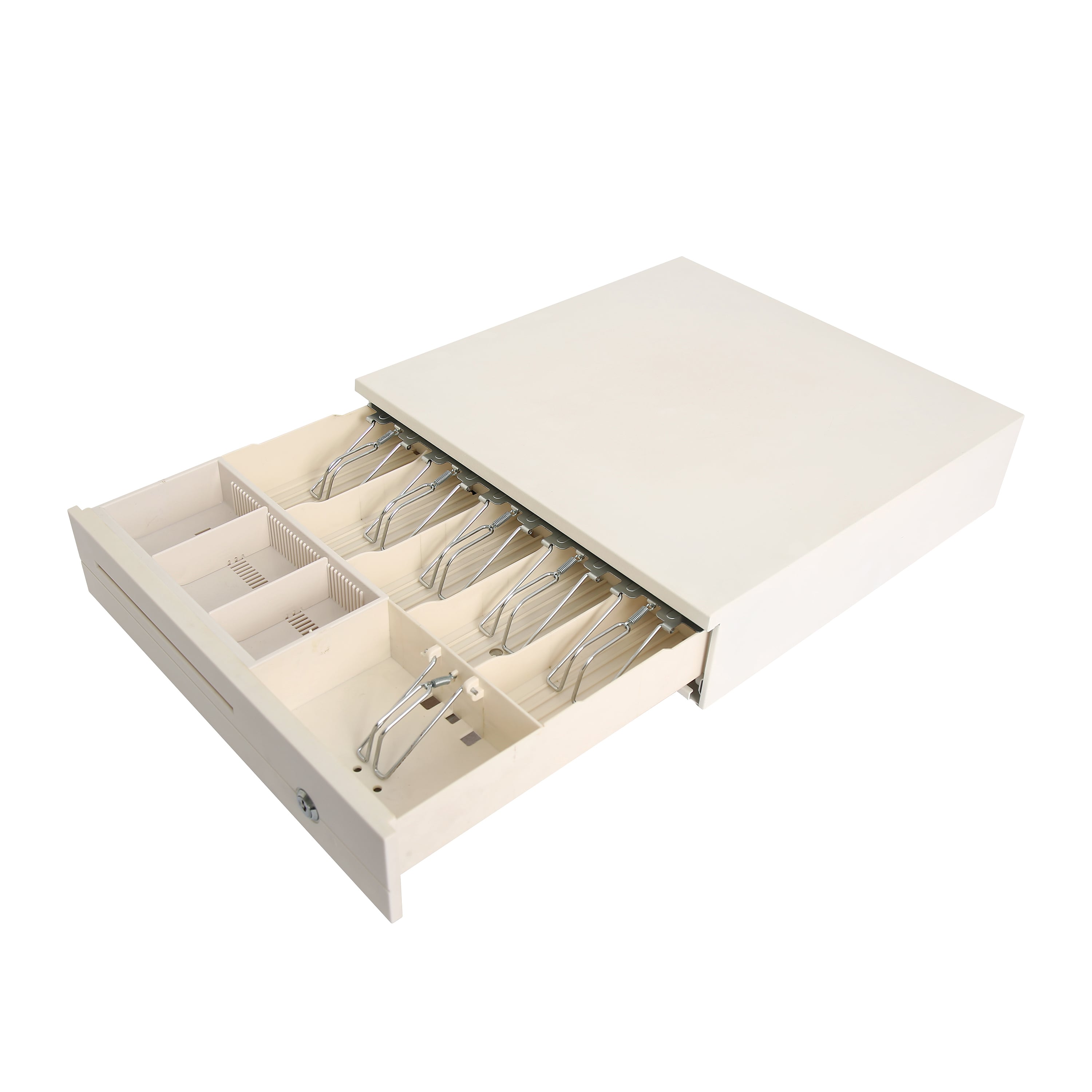
Modern cash drawers offer flexible compartment designs that accommodate bills, coins, checks, and vouchers efficiently. Divided bill slots keep denominations organized and speed up cash reconciliation at closing time. Coin trays with separate compartments for quarters, dimes, nickels, and pennies reduce counting errors and theft risk. Consider whether your till management system requires specific compartment arrangements to function optimally with automated counting or reporting features.
Prioritizing Cash Box Security Features
Lock Mechanisms and Access Control
Cash box security stands as the cornerstone of loss prevention in retail environments. Multi-level locking systems provide layered protection against unauthorized access and internal theft. High-quality cash drawers feature both mechanical locks and electronic triggers that only open when a registered employee completes a transaction through your POS cash register. This dual-control approach ensures that drawers remain secure during business hours and after closing.
Modern security features include time-delay locks, which prevent forced opening during robbery situations, and alarm systems that alert staff to unauthorized access attempts. Some premium models integrate with your security camera system, logging every drawer opening event with timestamp and employee identification. These features provide documented evidence for theft investigations and employee accountability tracking.
Tamper Detection and Durability
Physical durability directly correlates with security effectiveness in cash box security applications. Heavy-gauge steel construction resists prying attempts and forced entry far better than plastic or thin metal alternatives. Quality cash drawers feature reinforced locking bars, hardened strike plates, and weatherproof seals that prevent tampering. Steel hinges and reinforced corners withstand decades of daily use without degradation or weakness.
Evaluating POS Integration and Till Management System Compatibility
Connection Standards and Automation
Your POS cash register system must communicate seamlessly with your cash drawer to enable efficient operations and accurate reporting. Modern drawers connect via USB or serial interfaces, supporting real-time transaction logging and automated opening triggers. Ensure that your chosen cash drawer integrates fully with your POS software, allowing automatic opening upon payment receipt and synchronized reconciliation reports. Incompatible equipment creates manual workarounds that slow transactions and introduce accounting errors.
Advanced till management system features enable shift reconciliation, employee accountability tracking, and real-time cash position visibility. Systems that automatically reconcile drawer counts against transaction records identify discrepancies immediately rather than discovering problems during end-of-day audits. This capability proves invaluable for training staff and preventing systematic losses through careless handling or petty theft.
Reporting and Audit Trail Capabilities
Premium cash drawer models generate detailed audit trails that track every opening, transaction amount, employee identifier, and timestamp. This data integration with your till management system enables compliance with retail accounting standards and supports internal investigations. Electronic reconciliation reports that compare physical cash counts against system records highlight discrepancies instantly, making drawer accountability quantifiable and objective.
FAQ
What size cash drawer do I need for my retail store?
The appropriate size depends on your daily transaction volume and average cash per transaction. Most retail stores use standard twenty-inch drawers with fourteen to sixteen bill compartments and separate coin sections. Small specialty retailers might choose compact fourteen-inch models, while high-volume operations select oversized drawers or multiple cash stations. Measure your counter space and calculate your peak-hour cash volume before selecting dimensions to ensure comfortable fit and adequate capacity.
How does a cash drawer integrate with my POS cash register system?
Modern cash drawers connect to your POS cash register via USB or serial cables, enabling automatic opening upon payment completion and synchronized transaction logging. Your POS software sends an electrical signal when a transaction closes, triggering the drawer mechanism to unlock and open. This integration eliminates manual opening steps, reduces transaction time, and ensures that all cash movements are recorded in your system. Verify compatibility between your specific POS model and drawer hardware before purchase.
What cash box security features are most important for loss prevention?
Multi-level locking systems combined with electronic triggers provide the strongest theft deterrent for typical retail environments. Time-delay locks prevent immediate drawer access during robberies, buying time for staff safety. Heavy-gauge steel construction and reinforced hinges resist physical attacks and prying attempts. Integration with your till management system creates documented access logs that hold employees accountable and provide evidence for investigations. Together, these features create a comprehensive security posture appropriate for most retail operations.